
The Church is Hurting

By the Rev. Jonathan Abraham Kindberg, Director of C4SO’s Diaspora Network 

In cities across the United States, the Church is hurting. This past year saw massive changes in immigration policy and enforcement in our country, and according to a recent report by the United States Conference of Catholic Bishops, World Relief, and the National Association of Evangelicals (NAE), the majority of those affected are Christians. First Corinthians 12:26 reminds us that “If one part suffers, every part suffers with it.” In verse 22 of this same chapter, Paul says that “the parts that seem to be weaker are indispensable.” 

How are current policy changes and enforcement affecting immigrant Christians and thus hurting the Church? These are some of the stories we are hearing directly from our immigrant church partners: 

Iranian Muslim background believers fleeing persecution in Iran are currently held in Immigration and Customs Enforcement (ICE) detention with little contact with the outside world. 

Cuban and Burmese brothers and sisters are having their citizenship ceremonies indefinitely postponed with little explanation. 

After harrowing journeys and long legal processes to enter the United States and apply for asylum, Christian Venezuelans are being arrested and deported. 

Haitians have seen their legal protections put in limbo and work authorizations cancelled Visas for Nigerian family members are being blocked. 

Many immigrants are afraid to drive to a Sunday service and are simply staying home.

How Can We Make Sense of What’s Happening?

Some broader statistics and context may be helpful:

73.6% of those arrested nationwide have no criminal convictions.

Most of the people ICE is targeting entered legally. Many of those currently being detained have various forms of legal status including DACA, asylum cases, special immigrant visas (SIV), and lawfully present refugees. 

1 in 12 Christians stands to be deported or have at least one family member deported.

This alarming figure was revealed in the report we cited earlier from the United States Conference of Catholic Bishops, World Relief, and the National Association of Evangelicals (NAE). Unfortunately, we are now seeing this projection become reality. Nearly every immigrant church we work with has someone currently in detention at risk of deportation. 

How do we respond as the Church?

Pray: Join Diaspora Network each Tuesday on Zoom, 10-10:30 a.m. Central Time over Zoom to pray with and for the diaspora community in the US. (Email us for the link).  Join with churches across the country on March 25, 2026 for a special day of prayer and fasting.  

Learn: For a biblical perspective on immigration and other immigration-related resources, go here.

Advocate: Follow our partners at World Relief and The National Latino Evangelical Coalition (NaLEC) for practical advocacy resources and regular updates.

Give: Financially support the Diaspora Network or C4SO immigrant congregations such as Iglesia de Cristo Anglican Church in Kansas City. (Select Iglesia de Cristo from the drop-down menu.) 

Hold on to Hope

In the midst of all the upheaval and stories of suffering, there are glimmers of hope and so many testimonies of faithful resistance and perseverance: 

Iranian believers in Texas are sharing the Gospel with other detainees from Afghan Muslim backgrounds. 

White Christians are bringing food and Bibles to immigrant apartment complexes in Minnesota sheltering in place.

Haitian churches across the country are mobilizing to pray and fast for the continuance of Temporary Protective Status (TPS) and seeing breakthroughs and answers to their prayers. 

These testimonies give me hope and renewed trust in God’s faithfulness in and through his body even as she hurts.

Lent Devotional: Ash Wednesday

Sign up here to receive Savior’s Lent devotionals in your inbox.

“Is not this the kind of fasting I have chosen:

to loose the chains of injustice

and untie the cords of the yoke,

to set the oppressed free

and break every yoke?

Is it not to share your food with the hungry

and to provide the poor wanderer with shelter—

when you see the naked, to clothe them,

and not to turn away from your own flesh and blood?”

Isaiah 58:6-7

Dear Savior Family,

Today marks the beginning of our 40–day journey through Lent toward Easter — a season when Christians around the world choose to slow down, reflect and turn their hearts more intentionally toward Jesus. This season invites all of us into a posture of humility and spiritual renewal.

On Ash Wednesday, we remember that we are dust — fragile, temporary and dependent on grace. As the ashes are placed on our foreheads tonight as a symbol, I invite you to also stand in solidarity with millions of families for whom dust is not symbolic but painfully literal — the dust of bombed neighborhoods, burned villages and long roads walked in search of safety. May this journey toward Easter turn our hearts toward compassion for all who wander, seeking refuge.

This year, Savior is joining a 40–day experience created by World Relief called On the Move to Easter: Walking Toward Easter Alongside People Forced to Flee. It’s a simple, biblically grounded journey that weaves together Scripture, stories, silence and prayer — helping us walk with Jesus and with those experiencing displacement today.

In a world crowded with noise, hurry and overwhelming need, many of us long for deeper connection with God. We desire space to lament honestly, listen quietly and engage the world’s suffering — not ignore it or feel crushed by it. This journey is meant to help us slow down. To sit with God in silence. To open our hearts to the pain of our neighbors — both near and far. To remember displaced families and see them through God’s compassionate eyes. And to discover the strength that comes from trusting a Savior who meets us in suffering and leads us into resurrection hope.

By Easter, our prayer is that we will rediscover courage rooted in Christ, deeper compassion for a hurting world and renewed hope that carries us well beyond this season.

How to Begin Today

To start this journey, I invite you to take two simple steps:

1. Watch & Pray

Watch the Forced to Flee video and take a moment to pray and lament for families displaced by conflict, persecution and poverty. Please note: This video depicts a refugee family fleeing violence and may be upsetting for some audiences. Viewer discretion is advised.

2. Sit in Silence & Discern

Spend a few quiet minutes asking God: What might you want me to give up and what do you want me to give back in this season of Lent? This helps us not only relinquish something but become generous and attentive to others as we walk toward Easter.

I look forward to walking this meaningful journey together — following Jesus toward the cross, and toward those who suffer.

Grace and peace,

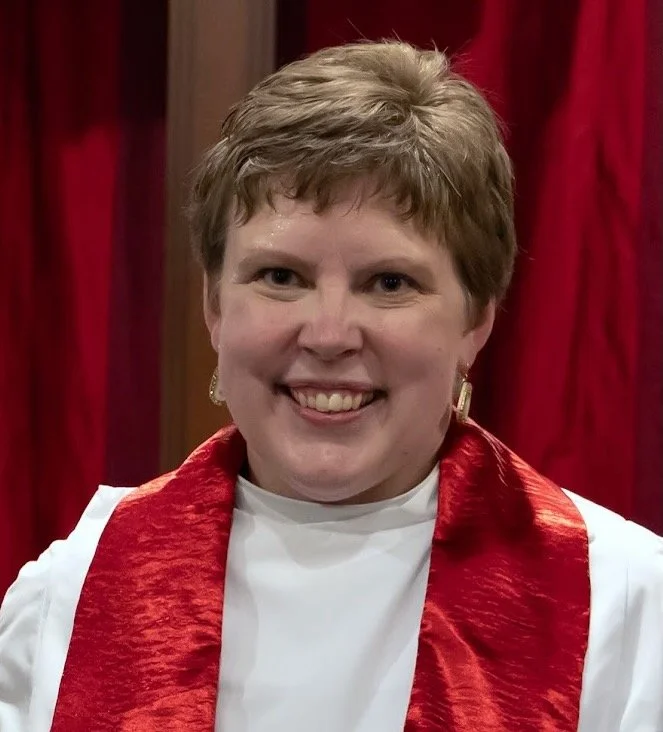
Mother Sarah

5 Things You'll Need for Lent

February 18th is Ash Wednesday , the start of Lent. On that day, I will, in the words of the Prayer Book, “invite you... to the observance of a holy Lent, by self-examination and repentance; by prayer, fasting, and self-denial; and by reading and meditating on God's holy Word.” This journey through Lent is intended for our blessing, but it’s possible for Lent to unintentionally become a burden. Here are some lessons from my mistakes:

  • I need the right reason. There’s only 1 good reason to practice the spiritual disciplines. It’s not to make God love me more. It’s not to prove to myself or God or anyone else that I have heroic virtue. (One year I gave up coffee for Lent and became not more holy but more cranky.) The 1 healthy reason to practice disciplines is to make more space in our lives for God. That’s why I like “subtraction-addition” disciplines, where we give up something to add something. For example, Karen has sometimes given up for Lent listening to music or radio in the car (subtraction) so she gains that time to pray (addition). One year, I gave up Starbucks mochas (subtraction) and gave the money I saved to an organization serving the poor (addition).

  • I need breathers. The church provides these during Lent every Sunday, the day of resurrection. If you give up, say, chocolate or social media for Lent, it’s not cheating to enjoy those on Sunday. Healthy enjoyment on the Sabbath says, “Even greater than my sin is the resurrection of Jesus Christ.”

  • I need creativity. There is usually more than 1 way to practice a discipline. The way you do it must fit you and your stage of life now, not as you wish it to be. Take fasting. We think of fasting as going without any food. But in the Eastern Orthodox churches, which fast well over 100 days per year, believers don’t fast from all food, but from meat, dairy, eggs, and wine–close to a vegan diet. Other Christians practice a “Daniel fast”--essentially a vegetarian diet. With my Parkinson’s, I can no longer fast for a full day, but I can delay a meal by a few hours; or even harder, fast from using my phone.

  • I need to do something. As soon as I consider any discipline, my mind spins off 14 reasons why I can’t do that. It’s just the “whiny kid” part of myself explaining why he shouldn’t have to do homework.

  • I need others. During Lent, other Christians help me keep going; reassure me when I fail to keep the disciplines I JUST SET; and confess with me every week, “We have not loved you with our whole heart; we have not loved our neighbors as ourselves.” Then, when Easter Vigil comes, they help me to sing and dance with joy.

Recent Anglican News Resources