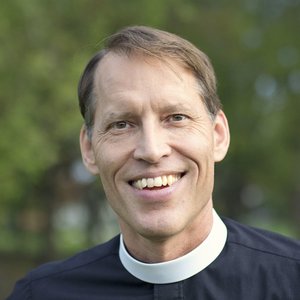
Spotlight on Hope Grant

Hope Grant.jpg

Hope Grant is a long-time member of Savior and, even if you haven't met her yet, you benefit from her ministries every week. Hope coordinates the lay readers — the people who do the ordinary weekly scripture readings as well as all of the dramatic readings throughout the year — and she also coordinates altar clean-up. In today's post, get to know Hope a little better:

Where do you live and where are you from?

I live on the west side of Wheaton, near the DuPage County Complex, with my cat Lewis — a short-haired, domestic cat with white fur and black spots. I was born in Washington, D.C and raised just outside the city limits in Maryland. I also have two grown children who both live in Europe. Kyle is in Barcelona, Spain and Katie living in England with her husband and my 3 ½ yr old grandson.

What do you do when you’re not at church?

I work part-time at Wheaton College’s Wade Center greeting visitors, giving tours of the museum and occasionally presenting a story time using one of our authors’ works. I’m also an occasional “cat whisperer”—caring for all the needs (including medical) of cats whose owners are out of town. I love to cook and share it. I Enjoy calligraphy and making my own cards. I enjoy sewing, too, and have made all of the banners for Children's Worship at Savior.

What is your favorite quote?

“The movement from illusion to dependence is hard to make since it leads us from false certainties to true uncertainties, from an easy support system to a risky surrender, and from many 'safe' gods to the God whose love has no limits." — Henri S.J. Nouwen

How do the ministries you lead serve the life of our congregation?

As Lay Reader Coordinator: We in the Anglican Tradition have a very high view of Scripture and at every worship service read from the Old Testament, the Psalms, the Epistles and the Gospel. My prayer is that when the Word is read and we take it in, that God will become flesh in us and make us into living Christs!

Altar Clean-up Coordinator: I delight in setting an inviting table. That is what our Eucharist is, the Table of the Lord where all baptized Christians are welcome. I want each time to be very special and taking care of our altar ware and linens is an integral part of the celebration.

How can people get involved in the ministries you lead?

Just connect with me (hope.h.grant@gmail.com) and let me know your interest. I’d be glad to talk with you and get you involved.

Celebrating Eastertide

In the liturgical year of the church, we have entered the season of Eastertide. We spent weeks walking through the repentance and fasting of Lent, and then we experienced the pain and darkness of Holy Week as we commemorated Jesus' last supper with his disciples, agony in the garden, betrayal at the hands of a friend, and his suffering and death. We then spent a long Saturday watching for resurrection.

And then, on Easter, we celebrated new life, resurrection life. We rang bells and shouted joyful "alleluias" during our Easter celebrations.

But the celebration of Easter doesn't end when the ham is stowed back in the refrigerator and the chocolate smears have been wiped off the tiny mouths. The celebration of Easter continues for a whole 50 days: the 40 days of Lenten fasting, plus another 10; a week of weeks spent rejoicing in the risen Christ.

Most of us are used to celebrations that last a single day: Birthdays. Anniversaries. The Fourth of July. We celebrate for a day, then return to our normal life.

But the rhythm of the liturgical year asks us to extend our celebration beyond a single day. If our preparation for Easter lasts for 40 days, why shouldn't our celebration last just as long? Easter is the high point of the Christian year; the beautiful reality of the resurrection certainly deserves more than a single day of celebration.

In a society that constantly moves on to the next thing, spending 50 days in celebration can feel just as counter-cultural — perhaps even more so — as spending 40 days in fasting and repentance. What might it even look like to spend seven weeks celebrating Easter?

In our weekly worship, you'll notice some special reminders that we are in a celebratory season:

  • The white and gold banners behind the altar, the gold stoles worn by the priests and deacons, and the white albs worn by the prayer and communion ministers all symbolize celebration and resurrection. In Children's Worship, our children sing about the colors of the church year: "White says rejoice! The feast is here."

  • The Paschal candle — the tall white candle with the cross — was kindled with new fire during the Easter Vigil and will burn during all of our Eastertide services.

  • At the beginning of worship, we exchange the Easter greeting. The celebrant says, "Alleluia! Christ is risen!" and the congregation responds, "The Lord is risen indeed! Alleluia!"

  • Along with this greeting, our "alleluias" have returned throughout the liturgy, before the gospel, in the Great Thanksgiving, and in the dismissal.

  • The children continue to dance with streamers, a reminder for them and for the congregation that we are continuing to celebrate Easter.

At home, you might also incorporate some of these practices:

  • Use white or gold seasonal decorations — even a simple tablecloth or runner can be a good reminder of this season of Eastertide.

  • If you have a Paschal candle, or a white candle, burn it during meals or devotions.

  • Eastertide is a celebration, a feast, in contrast to the fasting of Lent. Find ways to "feast": share a meal with friends and exchange the Easter greeting, take time to relax and enjoy nature, buy discount Easter candy to last through the season!

We often assume that discipline applies to hard things — after all, who needs to be disciplined in order to celebrate Christmas or a birthday? But Eastertide asks us to be disciplined in our celebration of Christ's resurrection. As we see from Jesus' disciples, who went back to fishing after they encountered the risen Christ, it can be all too easy to forget that the resurrection should impact our daily lives.

Just as Lent reminded us that we need a savior, Eastertide reminds us that we serve the risen Christ. And so let us light our candles and ring our bells for the 50 days of Easter in celebration.

Alleluia! Christ is risen!

For more ideas about how to celebrate Eastertide, see this post from our diocese, Churches for the Sake of Others.


Sarah Lindsay currently serves as the Director of Communications and Coordinator of Children’s Ministry at Savior. Sarah has a background in teaching (English literature and writing) and she enjoys reading and writing. She has been an Anglican since…

Sarah Lindsay currently serves as the Director of Communications and Coordinator of Children’s Ministry at Savior. Sarah has a background in teaching (English literature and writing) and she enjoys reading and writing. She has been an Anglican since she discovered liturgical worship in college; she and her family joined Savior in 2017.


A Look at Our Eastertide Sermon Series

Early Christian writers sometimes called Sunday “the 8th day”—because on Easter Sunday, Jesus rose again and started a new Creation. The old Creation came in 7 days, and the new Creation started on the 8th. It’s like finishing the alphabet and moving on from Z to AA.

In this new Creation, which we who follow Jesus start to experience now, Sin no longer has the power to enslave us and Death is defeated. When you know you're going to live forever, the terrifying dread that everyone tries not to think about gets lifted off.  You and I will know life and love in Christ forever.  

To help us live in this new Creation (even as we still groan for it to come in completeness), in the season of Easter, the church focuses on (a) Jesus' resurrection appearances and (b) his key teachings to his followers. We’re calling our series, “What Jesus Gives His Followers”:

  • April 27: “Reassurance--When We Doubt,” Sandy Richter

  • May 4: “Restoration--When We Blow It,” Fr. Kevin

  • May 11: “Protection--When We are Pulled Away,” Fr. Bill Richardson

  • May 18: “A New Command--When We Don’t Know What to Do,” Fr. Kevin

  • May 25: "Peace—When We are Afraid,” Fr. Kevin

  • June 1: “Unity—When We Can't Get Along," Dcn. Josh Steele


Kevin Miller, Savior’s Rector, was editor and vice-president at Christianity Today for 26 years and then associate rector at Church of the Resurrection for 5 years. He has been the rector at Savior since January 2017, and is also the co-founder of P…

Kevin Miller, Savior’s Rector, was editor and vice-president at Christianity Today for 26 years and then associate rector at Church of the Resurrection for 5 years. He has been the rector at Savior since January 2017, and is also the co-founder of PreachingToday.com and CTPastors.com.


Experiencing the Love of Jesus on Maundy Thursday

On Maundy Thursday, we gather for the second service of Holy Week, which marks Jesus’ Last Supper with his disciples prior to his arrest by the Jewish leaders. On this night, the apostle John recorded that Jesus washed his disciples’ feet and gave his disciples both the model for the Eucharist and a “new command” to love each other as Jesus loved them (John 13:34). 

Maundy is a word derived from the Latin which means “mandate” or “command.” Jesus models the command he gave to his disciples, to love one another, in the Last Supper and the washing of the disciples’ feet. While we celebrate this last supper weekly, Maundy Thursday gives us a unique opportunity to imitate Jesus and show his love to one another by washing each others’ feet.

Jesus takes on the position of a menial slave in the act of foot washing. This would have been unusual behavior for a rabbi at that time—a rabbi should have humility but never give up his station of authority. Jesus adorns himself as a slave and washes his disciples’ feet. Although it was the custom to wash the feet of one's guests before dinner, normally the disciples would have been the ones serving their master. Jesus’ behavior is different in order to show his disciples how his Kingdom has turned social norms upside down. The church continues this practice on Maundy Thursday – the foot washing after the reading of the Gospel and the sermon was a common practice by the fourth century AD. 

When the Eucharist is celebrated on Maundy Thursday, it is the last Eucharist meal consecrated until the Easter Vigil. The priest consecrates elements for this service and reserves enough bread and wine for Eucharist on Good Friday. Customarily, Maundy Thursday extends into an all-night prayer vigil, commemorating Jesus’ request that his disciples stay up praying with him in the Garden of Gethsemane before his arrest. 

The Maundy Thursday service invites us to allow Jesus into our whole lives. Jesus shows his tender love for us through the vulnerability of washing our feet. Jesus washes us of our sin through his broken body and his blood spilled out on the cross through the sacrament of Communion. This service is intensely embodied – we are invited to see, hear, and feel Jesus with us. 

In the midst of a worship service it feels both bizarre and startlingly vulnerable to strip off our shoes and socks and place our feet in a basin of water. The foot washing portion of the service forces us to be exposed and vulnerable. It is in that place that we can receive healing and the fullness of the Lord Jesus' love for us. 

In the Gospel reading for this service, the disciple Peter is indignant when Jesus asks to wash his feet. Either Peter does not want his Lord to stoop to such a lowly place, or he does not want to show Jesus his dirty feet (or both!). How easy it is to sympathize with Peter in this moment. But instead of appreciating Peter’s concern for him, Jesus says, “If I do not wash you, you have no share with me” (John 13:8).

Jesus displays his incredible humility and the fullness of his humanity – he is not above us or our bodies. Jesus became one of us, and a servant to us, in order that he might bring us into full relationship with God the Father—that we might share eternal life with him. Jesus’ servanthood, seen in the washing of feet, is then fully realized in his death on the cross.


Ellen works at Savior as the Youth Coordinator. She is also an Editor of Bibles & Reference at Tyndale House Publishers; she has worked there since 2014. She has worked and volunteered in a variety of youth ministries over the past decade and sh…

Ellen works at Savior as the Youth Coordinator. She is also an Editor of Bibles & Reference at Tyndale House Publishers; she has worked there since 2014. She has worked and volunteered in a variety of youth ministries over the past decade and she began attending Savior in 2017.


Help to Enter Holy Week

It’s intense and only once a year. What is going on?

For Christians, the most important week of the year is Holy Week—the name we give the final and ultimate week of Jesus’ earthly life.

We don’t so much study that week as enter it. The celebration of Holy Week began in the 4th century, as Christians in Jerusalem wanted to worship Christ in the exact places where he had been, to retrace his steps during those momentous events. Therefore, our worship during Holy Week is tactile, often primal—waving palm fronds, touching a wooden cross, lighting a candle, washing feet, dancing, ringing bells. (This is also why it’s a great week for kids. They often enter this worship better than we do.)

We celebrate Holy Week as one unified week, one giant wave rising and cresting and carrying us toward the shore. We aren’t used to thinking this way. Most folks I know grew up viewing Maundy Thursday as wholly optional, Good Friday as a funeral service, and Easter Vigil as that weird thing Anglicans do. Actually, those 3 services are 1 joint service. We don’t “end” the service after Thursday or Friday; there is no closing hymn, no recessional, no dismissal. We simply allow you a break to go home and sleep, then come back to continue in worship.

And now a few pastoral and practical words for each service:

HolyWeekGraphics-PALMS.jpeg

Liturgy of the Palms: Service of the Passion

As the service starts, we are the crowd along the road into Jerusalem, waving palm branches and singing to welcome Jesus as he enters Jerusalem as King. (Dress warmly, since this part of our service goes outside.) Back in the Sanctuary, we hear the Passion reading—the account of Jesus’ trial and crucifixion. Now we are the crowd that turns against Jesus, shouting “Crucify him!” (Join in loudly at this part of the reading. If it feels jarring, that’s the idea.)

HolyWeekGraphics-MAUNDY.jpeg

Maundy Thursday

The word “maundy” comes from “mandate,” because on the Thursday night before he died, Jesus gave his followers a mandate: “Love each other just as much as I love you” (John 13:34). In this service, we are the disciples, and we see how much Jesus loves us: (1) He washes our feet (wear socks and shoes easy for you to remove); (2) He gives us his life in the Last Supper; (3) He prays in agony in Gethsemane until he can take on the suffering for our sake (you’re invited to stay and pray, as the disciples were invited by Jesus to pray with him.)

HolyWeekGraphics-FRIDAY.jpeg

Good Friday

Christians call this disastrous day in Jesus’ life—an event of government-sponsored torture and public execution—“good.” In what possible way could “Good Friday” be good? Because a greater plan was at work. Several times Jesus predicted that he would be betrayed, tortured, and killed (Luke 9:22; 9:44; and 18:31-33)—and, incredibly, this was part of God’s plan (Luke 22:22) and the reason Jesus came (John 12:27-28). Therefore, our worship is somber but not funereal. As Ellen Richard Vosburg has written, “This is not a somber recapitulation of Jesus' death, but rather a thankful and reverently joyful recollection of his death that gave us life.” On Good Friday, we are eyewitnesses of Jesus’ suffering and death. We hear and participate again in the Passion narrative. And we spend time in prayer at a wooden cross, taking in that God would love us enough to suffer this for us.

HolyWeekGraphics-VIGIL.jpeg

The Great Vigil of Easter

In the early church, new believers could not receive the sacred mystery of Communion until they had been taught and trained. The final night of their training was the night before Easter. They would stay awake all night. At dawn, as the Easter sunrise began to light the sky, they would be baptized and put on white robes. That’s how the Easter Vigil began.

Like those early believers, we spend a long time in worship (so bring water and maybe a power bar). The service comes in 4 parts:

  1. Service of Light: a new fire is kindled, and from it the Paschal Candle (meaning Easter Candle) is lit, symbolizing Christ, the light of the world. We share in that light by lighting our own candles (When lighting candles, tip only the unlit candle).

  2. Service of Lessons: we hear how God saved his people in ages past and respond with songs and prayers. That culminates in the Acclamation that “Jesus is risen!” which is shouted and celebrated. (Bring a bell to ring!)

  3. Baptism: we baptize new believers and also renew our own baptismal vows (which includes the sprinkling of baptism water on the congregation, so if you wear glasses, you might want to remove those for that brief time).

  4. Communion: we celebrate the victory of Life over Death in this holy feast and continue the celebration with singing and dancing (wear comfortable shoes).

HolyWeekGraphics-SUNDAY.jpeg

Easter Sunday

Our joy continues with singing and Communion—this year, an Agape-style Communion around tables. And we share a leisurely brunch with one another, enjoying community and thanking God for all he has done among us during Holy Week. (You’ll be tired, so enjoy some coffee, and if you can, go home and take a nap.)

Thanks to Erik Peterson for the Holy Week graphics.


Kevin Miller was editor and vice-president at Christianity Today for 26 years and then associate rector at Church of the Resurrection for 5 years. He has been the rector at Savior since January 2017, and is also the co-founder of PreachingToday.com …

Kevin Miller was editor and vice-president at Christianity Today for 26 years and then associate rector at Church of the Resurrection for 5 years. He has been the rector at Savior since January 2017, and is also the co-founder of PreachingToday.com and CTPastors.com.